Solomon Benjamin
Consider the varied images along side: The first set of thee are around service outlets of phone repairs. This adjoining one displays of brands, the two of the three partners Shekar in his signature red T shirt disassembling an android phone with well experienced dexterity, while one of his two business partners looks on, smiling and in humor. Later in this text, and via the films hyper linked, we will meet Shekar and his third and more recent business partner Ram Kumar. This will be in their ‘posher’ setting, a first floor rental of an earlier Apple Phone service centre, it’s memory now transplanted to it’s new ‘owners’. The second image is the outer side street of that new shop with its sparkling white interiors, Apple Logo complete, a front desk and a back office lab (where the filming of RamKumar was done, him perched on a high stool). The third image connected to this street view, is a Google Satellite view extract – where lables reveal a density of varied uses that range from HipHop dance teaching centres to smaller commercial retail, courier worlds, horroscope astroleger, logitech suppliers, finance companies, jewlers that double as loan suppliers, interspaced with ‘paying guest’ cheap rentals aimed at young ‘IT workers returning home tired after their webtimed locations in Europe and North America, leaving their manicured accents behind, but in this semi night early morning, the street will always have some food and other life forms alive for nourishment, much of it, Uber-Swiggy home delivered.
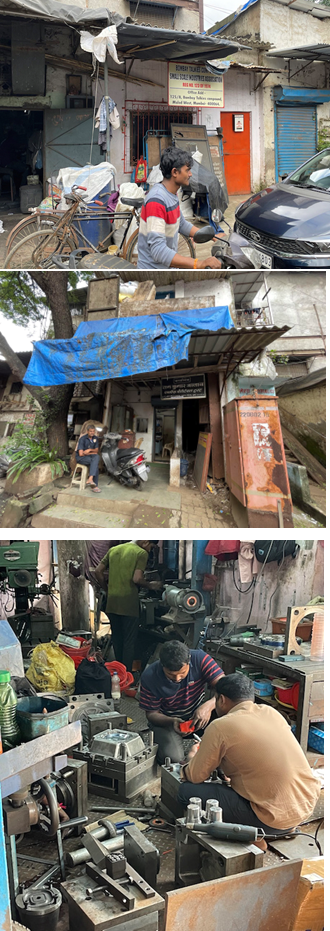
The second set of images of fabrication workshops set in Malad’s Somwari Bazzar industrial area. The Somwari Bazzar fabrication unit has sited on the Bombay Talkies, — half a century ago Bombay’s and South Asia film studio. Since the 1960-70s increasingly its large grounds occupied and reworked over time. Such realms of density making up most of Mumbai and elsewhere too: the ground floor workshop fronted with a street stairs to another upper floor. The connected image has a door watchman on a plastic stool siding a motor-scooter – both front a the dark dingy space that housed a agent of the trust who remained suspicious of our efforts to locate his boss, — remenants of the Jalan Trust. At one time this Parsi clan at the turn of the 19th-20 centuary as Karachi’s biggest land owners too threatening to their colonial master were force shifted to Bombay. There they became that metro’s land hegomon. Since the 1950s and the decades that followed, their vast territory lay embattled in claims and counter claims. The point of placing this set of images is foreground the slow and relatively invisible appropriation of singular property forms into an effect of ‘socielization’ but rather in it’s counter. Capital bleeds with singular forms of property being underminned within the commodity process.
….The pugdi system was made legal as per the Maharashtra Rent Control Act of 1999 and came into effect in the year 2000 and follows the new law for pagdi system in Mumbai.Section 56 of the Rent Control Act of 1999 ……..Additionally, as per the incentivising programs by the DCPR or Development Control and Promotion Regulations, if a developer takes up the redevelopment of 2 to 5 Pagdi properties, the FSI incentive can go up to 60-70%. Bombay Parsi Punchayet (BPP), the apex representative body of Parsi.
*If there should be an occurrence of sub-letting, the old inhabitant, who presently is a proprietor and the first landowner of the property, will share the lease sum among themselves, as a rule, at a 35:65 proportion. This works for the landowner to bring in some cash off their resource while sidestepping charges. The old occupant benefitted too, and the new inhabitant leased the premises at a highly ostensible lease. There is no recommended regulation about charges to be paid to a property manager for a No Objection Certificate. For example, in the Pagdi framework, if a present inhabitant needs to sell their home for Rs.10 lakh, they are obliged to pay close to 3 to 5 lakhs to the property manager. They appreciate confined freedoms because the landowner gathers ostensible leases and gives the receipts. **https://www.honestbroker.in/blogs/what-is-pagdi-system***
Outgoing Tenant of the Second Part’ has acquired a better and larger flat elsewhere and wants to relocate there with his family, he desires to surrender all his tenancy rights in the ‘Said Tenement’.
AND WHEREAS, the ‘Incoming Tenant of the Third Part’ being in the need of a suitable accommodation has approached the ‘Landlord of the First Part’ and the ‘Outgoing Tenant of the Second Part’ with an offer to acquire the tenancy rights in respect of the ‘Said Tenement’. Deed of Tenancy Transfer – Maharashtra Housing and Building laws/ deed of tenancy transfer Section 342 of the MMC Act 1988
*The Bombay Rents, Hotel and Lodging House Rates Control Act, 1947 Bombay Act No. 57 of 1947 http://www.bareactslive.com/MAH/mh382.htm and Repair Cess Part 8 of the Chapter VIII Mumbai Municipal act of 1888/ Tenantable repairs; Repair Policies and Scrutiny of Repairs Proposals_22.04.1996 https://www.mcgm.gov.in/irj/go/km/docs/documents/EODB/Construction Permit/Related Circulars/Repair Policies and Scrutiny of Repairs Proposals_22.04.1996.pdf*
*The Bombay Rents, Hotel and Lodging House Rates Control Act, 1947 Bombay Act No. 57 of 1947 http://www.bareactslive.com/MAH/mh382.htm and Repair Cess Part 8 of the Chapter VIII Mumbai Municipal act of 1888/ Tenantable repairs; Repair Policies and Scrutiny of Repairs Proposals_22.04.1996 https://www.mcgm.gov.in/irj/go/km/docs/documents/EODB/Construction Permit/Related Circulars/Repair Policies and Scrutiny of Repairs Proposals_22.04.1996.pdf*
‘Bombay Rents, Hotel and lodging House Rates Control Act’ 1947; In order to make up for increasing service expenses, the municipality levied a tax as high as 142%, repair tax 402% (residential) and 755% (non-residential) for buildings repaired by the repair board.
*https://medium.com/anupam-logos-archives/rent-control-in-mumbai-eb2bd14669f6*
In effect, the thickness of tenurial claims that materlialize these economies — our first theme of this essay. This idea underpins in the text box in the next set of images. At first glance this are seemingly mangled, something you’ll pass by. As declarations glimsed in various advocate blog – web spaces, to be explored as you want to claim, or then confront someones elses who does. Some are from the Bombay Parsi associations, and with the complex legal legacy of property ownership since British colonialism but hot in circulation and appropriation.
These texts sencing bureacatic realms where govt issued ‘orders’ represent the Bureacrat as Superb and particuarly radical artists! Who else could, and would via a slip of paper work that ‘miracoulosuly’ works the system, layer into layer, at times bypassing others by large policy connected corporate big business. Which other realm, where social movements fear to even tread, or more accuratly, remain too confused, wherein large individual property exclusives like in the Malad centered Bombay Talkies morph into millions of appropriations, adjustments. These are not just passive, but at the core, tap into real estate and disrupting the binary of land lord and tenant.
The materiality of ‘land as territory’ revealed via the ‘shop talk’ of small-time builders, bank officials certifying property documents via senior managers to local field agents, brokers, lawyer consultants, architects with numerous resident co-op societies.
- Shop talk is not a clinical law, but pointer to it’s spatiality where indeterminate gaps and ambiguity suggest possibility, but also contests with other counter moves.
- The ‘focus field’ : it’s yin ‘governance’ of North American derived planning instruments like FAR morphing into other instruments to ‘fix’ property under PPPs, especially TDR by the Mumbai city corporation.
- It’s overpowering Yang enjoys its power centre within that same institution: legislation of the ‘Small Repairs Law’ (Scrutiny of Repairs DC regulations of 33-6) allow lease-based occupier tenants, and landlords to ‘improve’ property. These are bureaucratically negotiated spaces just as the ones for chawls, opened up via section 33(7), 33(7)A And 33(7)B of the Redevelopment of Old Buildings And Housing Societies
- Further reinforcing this realm it’s spatiality of Yang reinforced by, ‘tenable repairs’ for dilapidated structures under Section 353B allowing occupants to ‘renovate at will’, opened up, via section 342 of BMC Act, 1988 (amended till date), the following “tenantable repairs”.
- The ‘yin’ as a seed, can be thought of the D.C.R 33(14)D (Permanent Transit Tenement) are constructed in situ by giving incentive FSI, or then it’s ‘fungible FSI’ – that fuel the ‘slum redevelopment scheme’.
Only a radical artist could even think of this as a project, or even a dream. But then, do not we all have to, as we dwelve later in this text, to think of popular politics underpining it’s deep memories and embeddings of land comes to be, but treating this project from the freedom possible in critical art? Is the poetic here stained ‘government orders’ where text of faded print mask an easy literal read ? Instead, the density and over writing is what allows to life forms coming alive? Is it possible that the cramped density witnessed in Malad but also Richie Street that we enter soon, that holds out indertiminate possiblity. There are no abstractions, please note. Life is immediate real yet indetiminate. This note one shown here pertains to bureacratic- legal drama was about the ‘pugri’ – a way to work real estate surpluses across varied claimants that represent how long have you been there, what you did to that place via people constellations you are connected to work thru. You are never alone in such a city, and always on the roll. This essay is about the popular inhabitations that constittute such density – their life forms, opening and closures and the politics that often metaphors within each layer of what’s immediate, pliable, to be worked upon, sensed in both opening and closures.

Our next set of images are anchored in Richie Street — Chennai’s main electronic market with life is extended into Shenzhen but also Dubai, and other electornic focused ‘China Bazzar’s in Indian metro cities: Lamington Road and Manish Market Mumbai, Gaffar Market and Nehru Place in Delhi. At dusk, the hill like conical dome in the background is of a site of mega refurbishment: A large state Legislative complex that, as some stories go, was not ‘vastu’ compliant, the customary ‘good luck’ cartography. Hence it’s use was changed to be Chennai’s newest and most likely biggest Super Speciality Hospital. Chennai is of course the destination capital of medical tourism – with other such sites long established and clientale from other parts of India and Dubai, UK, Canada and the US. They seek body parts, among other treatment and this helps enter the electronic world of Richie Street. Here too, it’s populated by service enggineers like Shekar, Rajkumar, (and Rahul, our third actor in the movie). Step back and think of the metaphor. To refurbished, re-engineer, to transplant, is to extend life. And if so, than lets think of ‘service engineers as viewed as surgeons, specialists and the components they play with in artistic ease, body parts. But in thinking of components as body parts, and If their hands hold the chips of a dis-assembled phone, the chip sets form its brains. Further, the experiential part of doing it right and over and over again, could be though to grow the brain of the phone into your fingers working unconciously. For these surgeons where switching components where nothing is e waste, where does the brain begin and end, and as the feelers of trade and refurbishing expand, and expand globally from Shenzhen to Dubai to Lagos and Cairo, so does your body too. Towards this, we traverse Richie Street via three essays posing it a massive hospital, or rather set of 5 hospitals clustered in each street with the particularities of those lines of specialists. A fun fact. Entering into Richie Street on one side that abuts the hospital fronting main road, are retailers and fixers of Radiology equipment. So the interfact to the mega hospital across the road is already entangled. However, its also that many worry that new parking lots and traffic management would take over Richie Street. We could also as elsewhere in projects of urban renewal, form an excuse to seek real estate surpluses by ‘thinning’ out land tenurial forms.
One important political of the popular lies importantly, in places like Chennai’s Richie Street, — where it’s experiencially produced and reconstituted. And connected to this, it’s in other similarly thickened tenurial space such as the one imaged here, where Shekar, an ‘ustaad’ of android phones, and one of his two business partner behind the counter, fix, repair, extend life – their brains of decade long combined accumulated knowledge, links materially and metaphocially to the nerve circuits of the mother boards, they are both born out of such contacts, the chipsets extensions of the finger tips, the CPU brain to theirs.
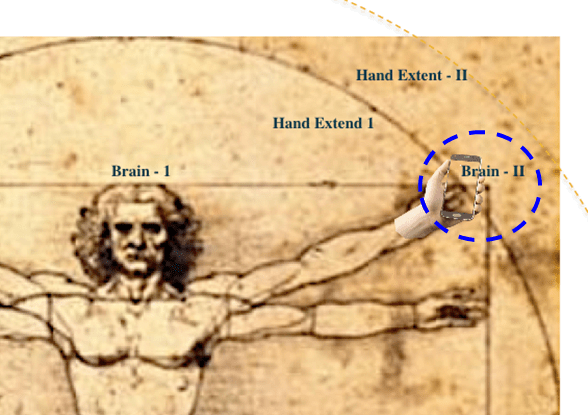
Our three essays explore such places. Here is where brains gets transplanted via these popular doctors to fix our body parts, replace them, recondition and refurbish, extend life in conjunction with far away places, Shenzhen’s HuaQueBei, Sharjah’s electronically lined street that overshadow for many it’s adjoining Dubai, on to sites in Europe – Paris’s Auberville where its clothing and fashion accessories from Yiwu (moderated by the King of Auberville’s of course), but in shared circuits to how electronics centre Cairo’s Al-Bustan Mall, reflect what Seoul’s Sayhoon Plaza “Sewoon” means “gathering of all spirits from around the world, not far and some time ago, Akiabhara in Tokyo Japan (See: Akihabara_Freaks / Akihabara Geeks in beginners japanology http://www.veoh.com/watch/v18947890687GMBsM?h1=Akihabara_Freaks+%2F+Akihabara+Geeks Or Japanology Plus] A trip through Akihabara 秋葉原 https://www.youtube.com/watch?v=6kOCWHhh1GI).

And of course, the electronic shops of LaPaz.
These are sites, each with their own situated histories, conflicts, political opening and closures but sense the sites we traverse here.
Politics of the Popular Extends life into Economy, refurbishes, reinvents, recreates, and we see it as an important ‘progressive radical’ that lies in tenurially thickened life space. Similarly emphasis is to centrally locate the embeddedness of Economy – Land – Identity as necessarily being indeterminate, fluid, often opaque to confront corporate business but also other realms of disciplining, such including ways to appropriate, resist and play with the ‘survey and the grid’.
The Progressive Radical in Popular Economies that Extends life into Economy refurbishes, reinvents, and recreates.
Poets overcome the anxiety of influence by misreading (or distorting) poetic reality…I think that law, like poems, must misread or distort reality and for similar reasons. Poems misread in order to establish their originality, while laws misread in order to establish their exclusivity. Irrespective of the plurality of normative orders we detect in society, each of them, taken separately, aspires to be exclusive, to have the monopoly of the regulation and control of social action within its legal territory..’ in “Law: A Map of Misreading. Toward a Postmodern Conception of Law Boaventura de Sousa Santos Journal of Law and Society , Autumn, 1987
A return to Ritchie Street, the ‘fear in this city’ lies across the road, a mega complex of Chennai’s perhaps largest super-specialty hospital whose life saver equipment contests the other kind of life and death dramas being played out in the complex of Richie Street’s electronic markets less than 200 meters away. Will the new parking lot as part of traffic management to make way for ambulances, or traffic to other city nerve centres including it’s central railway station ‘encroach’ on what’s evolved in this form of Chennai brain? Will mega complexes in many of the cities mentioned above have those consequences? This is not a unreal question. Note that in Seoul, it’s Cheonggyecheon riverfront redevelopment project, claims to be ‘sustainable but also impacted:
The merchants of Cheonggyecheon are mostly middle-class people owning small individual shops. They are mostly wholesalers supplying their commodities to larger corporations or organizations. Out of a total of 60,000 Cheonggyecheon merchants, 10% of themwere relocated. (One thousand forty-five merchants were relocated to Garden Five Mall in the far east of Seoul, which opened in 2010. However, due to economic reasons and lack of customers, only 100 merchants remain in the mall. The rest of the shops remained but due to increase of land price and redevelopment plans, many industrial shops are being replaced by high office buildings or commercial shops. Land prices in the Gwansudong area increased 50%–200% since the CGC Project (Seoul land information system) while the average land price increase in Seoul from 2004 to 2014 was 2.5%. (pg. 8 of How Do Mega Projects Alter the City to Be More Sustainable? Spatial Changes Following the Seoul Cheonggyecheon Restoration Project in South Korea Chehyun Ryu and Youngsang Kwon Sustainability 2016, 8, 1178;)
Here, the exploration of this urban renewal remains substantive when it is then the artists, as always, who are first to sense such politics – the stunning work as in ‘flyingCity’ Collective’s Mental Maps and Urban Planning Play in their ‘See Seoul, Then Die: The flyingCity Experience (flyingCity. 2004) or that of Jeon, Yongseok Agenda of the Urbanism Group ‘Flyingcity.’ Forum A. (2001); “Drifting Producers.” Art and Social Change. Ed. Will Bradley & Charles Esche, (2007).
“Those who admire the western Alexandrian tradition – the magicians of Surrealism, the sorcerers of illegible language – have been constructing general images of the dream. But we need to redefine the notion of the dream in a completely different context, as a space where reality returns.” Jeon Yongseok in Ch 6 Drifting Producers (cited in Scholte, T., The Perpetuation of Site-Specific Installation Artworks in Museums. Staging Contemporary Art. Amsterdam: Amsterdam University Press 2022 doi: 10.5117/9789463723763_ch06)
In contrast, in many of the Indian sites at least, have many if not most academics and ‘activists’ steeped in the high-ground of critical studies, seek greener pastures of the meta, where complexity is viewed contingently, too messy to vision, to organize where the neat box of social movements or ‘the Master Plan’ lies ‘disfigured by the crowd, it’s unruly patron clientalistic politics underpinned by real estate. Such ‘expert’ positioning, often if not mostly upper caste Brahmins intersected into a returning ‘Non-Resident Indians’ (NRI) stepping off their flight confronting in the harsh sunlight or humidity a ‘shock and awe’ as Prasad Shetty astutely commented, of their once knew but now long forgotten city, now viewed inherently as a violent urban. Of course it fits centrally into the northern conference circuits, but what it also does, in current times of danger, the push for land titling surfaced in a seductive ‘Right to Housing’, and to confront ‘encroachments’ via the might of the judiciary PILs seeking to safeguard ‘the plan- the policy’ as police. This is then the political confront, that allows us to dig deeper into what is radical progressive potential but also already well established in most of city terrains.
The idea of Tenurial Thickness as a drama disrupting the ‘singularness’ of property in complex entangled ways. The radical, as the visual artist Jeebesh Bagchi noted two decades ago, lay in how ‘ordinary’ acts of extending a room into a workshop, leasing it out to a tenant partaking in increased real estate surpluses, disrupting the binary of her ‘Landlord’ and as tenant, to then a foreman starting off in customizing a heating oven to be supplied to his ex-employer’s cable manufacturing unit that and copy reverse engineered a Korean machine from a Trade Exhibition brochure, but also in the process, added and subtracted into a new life force. This is then the poetics of appropriating property in land; in commodity and disrupting it’s singularity within the commodity process. Of course we may seek revolution, but subversion is right now and right here. To clarify this drama, that’s necessarily indetiminate, opague where liminality is a life space rather than death (Simone and Lacione 2021), Michele Lancione AbdouMaliq Simone 2021 Dwelling in liminalities, thinking beyond inhabitation EPD: Society and Space 2021, Vol. 39(6) 969–975) requires us to explore these intersecting realms.
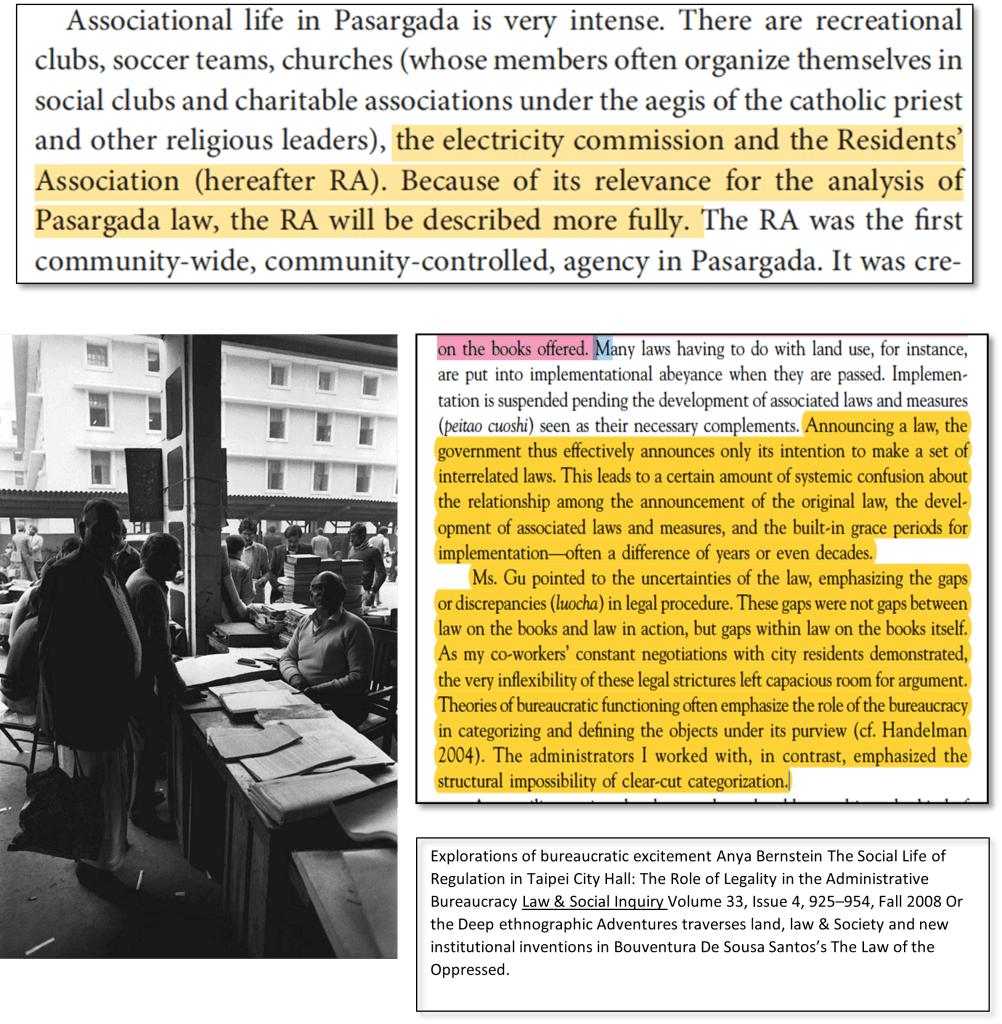
*The “Pagadi” – distributing real estate surpluses from moves from the necessarily “opaque” bureaucratic file notings into the world of small time ‘consultant’ advocates. And then into ‘law’ made explicit. .
BUREACRACTS – ADVOCATES AS RADICAL ARTISTS: Working real estate ‘rent’ surpluses across Owners and Tenants to Occupants:
Here Land as Property entangled as Territory allows a consideration of life space extensions open up when lines of real estate surpluses but also meanings of land as territory operate to disrupt neat lines across ‘tenants and landlords’

 Refurbishing Time
Leave a reply to Life Stories – Refurbishing Time Cancel reply